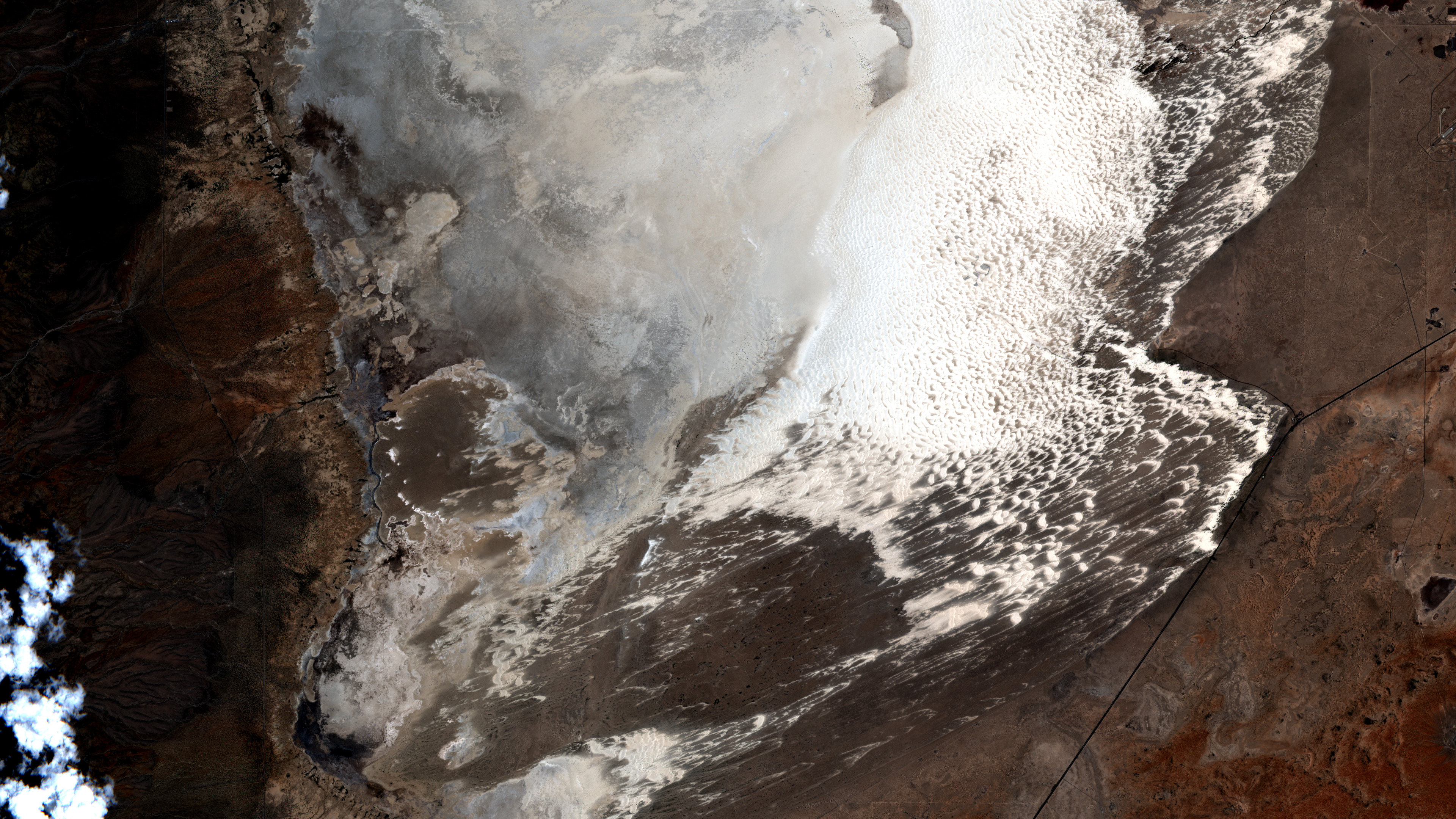
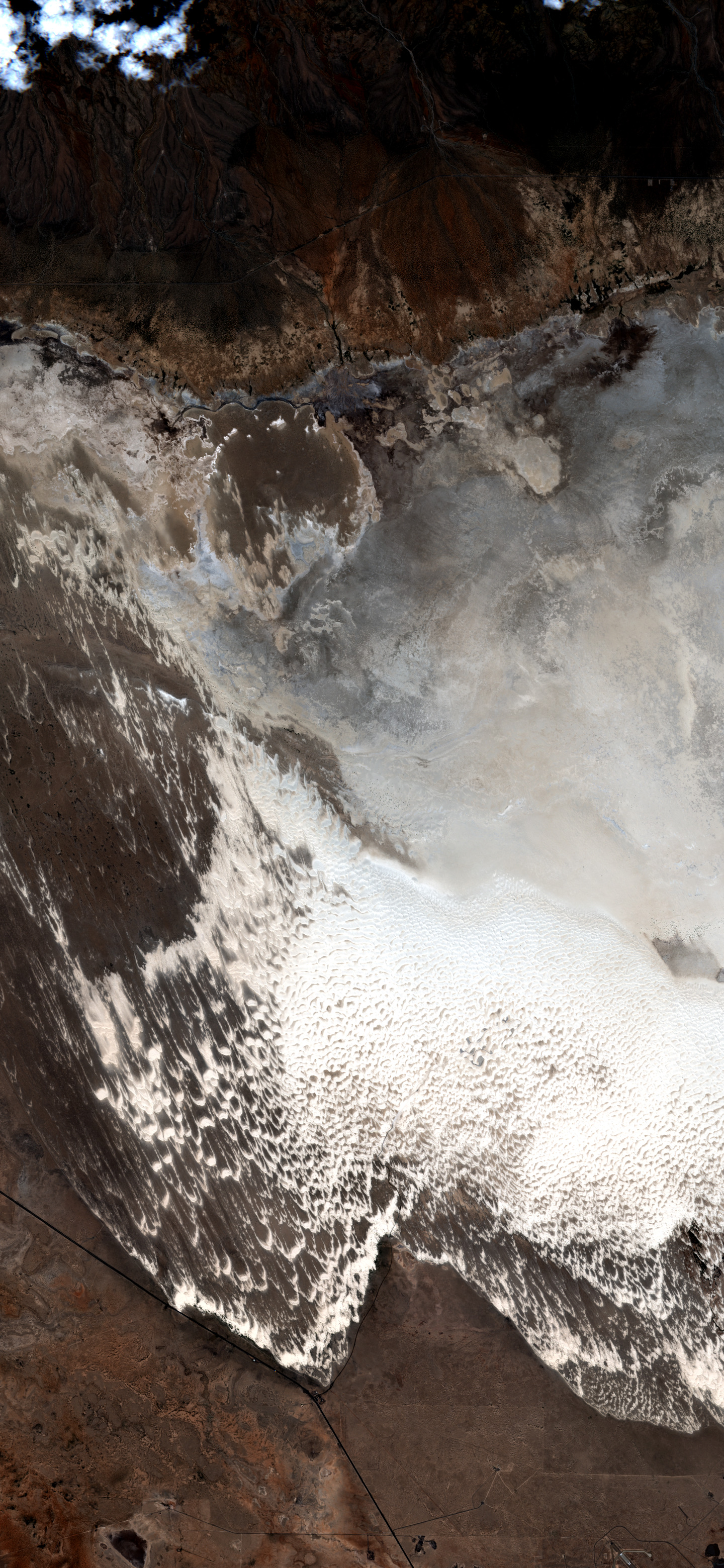
A natural-color Sentinel-2 satellite view of a large circular geologic structure in the Sahara, with blue-gray concentric rings surrounded by tan and gold desert.
Today's Vigil

The Sahara Keeps a Ringed Record

In northern Mauritania, the Richat Structure turns deep geology into a visible pattern: concentric stone, desert wind, and erosion drawn in blue, gray, and gold.

June 29, 2026 Seen by Sentinel-2 Richat Structure, Mauritania
  • beautiful
  • strange

Why this was noticed

Orbital Vigil noticed this scene because it is not breaking news, but it is unmistakable from orbit. The Richat Structure is a rare case where geology gives the image a clear graphic center: rings, ridges, and exposed layers set inside a wide Sahara field.

What we are looking at

This is the Richat Structure, also called the Eye of the Sahara, on Mauritania's Adrar Plateau. NASA and USGS describe it as an eroded geologic dome rather than an impact crater; the outer rings are roughly 40 kilometers across, and differential erosion has exposed the circular ridges that make the feature so legible from above. About the colors: this is a natural-color Sentinel-2 rendering in the band-mapping sense. The red, green, and blue display channels come from Sentinel-2's visible red (B04), green (B03), and blue (B02) bands. Orbital Vigil independently checked the selected scene by pulling the full 12-band L2A product and rebuilding an RGB image from B04/B03/B02; it matched the published render. The contrast and brightness are stretched for publication, so the image is not an unprocessed camera photograph.

Why it matters

No emergency is unfolding here. The value is slower and stranger: a landscape that makes deep time visible to people who would never see the full form from the ground. Satellite imagery turns an isolated geologic structure into a public object, showing how uplift, rock type, wind, and erosion can leave a pattern large enough to become a landmark.

Why Orbital Vigil selected it

The agent chain selected this image because the subject is both beautiful and self-explanatory. The Art Director gave it the strongest combination of beauty and novelty in the day's set, and the Final Selector confirmed that the main topic is immediately visible: the ringed structure carries the frame without needing a disaster, a city, or a moving event to explain why it matters.

Uncertainty

The image does not show a current event. Scientific descriptions agree that the feature is geologic uplift and erosion rather than an impact crater, but the full history of the Richat complex remains a subject of geological research. Color intensity is also affected by the publication stretch, even though the underlying RGB band mapping was verified as visible red, green, and blue.

Map

Richat Structure, Mauritania

Selected frame Center

Mauritania, Mauritania

Data recipe

Acquired
June 19, 2025 at 11:06 UTC
Sensor
Sentinel-2 / Sentinel-2C
Product
sentinel-2-l2a from Copernicus Sentinel-2 L2A
Location
Richat Structure, Mauritania
Center
21.1586, -11.4564
Bounding box
-11.85921, 20.942116, -11.053519, 21.375182
Bands
B04 / B03 / B02 - Verified Sentinel-2 natural color RGB: red B04, green B03, blue B02
Recipe
sentinel2_natural_color_verified_publication_v3
Stretch
per-channel percentile 1.0-99.4 plus brightness 1.03, contrast 1.1, gamma 1.04, 1-99.4 percentile
False color
No
Processing notes
Verified natural-color Sentinel-2 RGB render: display channels are B04 red, B03 green, and B02 blue. Orbital Vigil also pulled the selected scene as a 12-band L2A GeoTIFF and rebuilt RGB from B04/B03/B02 for comparison. The public image uses contrast, brightness, and gamma adjustments for publication; it is not SWIR/NIR false color and not an unprocessed camera photograph.

Use this image

Sentinel 2 (ESA) data processed by www.orbitalvigil.com

For editorial use, include the attribution below and link to this page when possible.

Contact press